

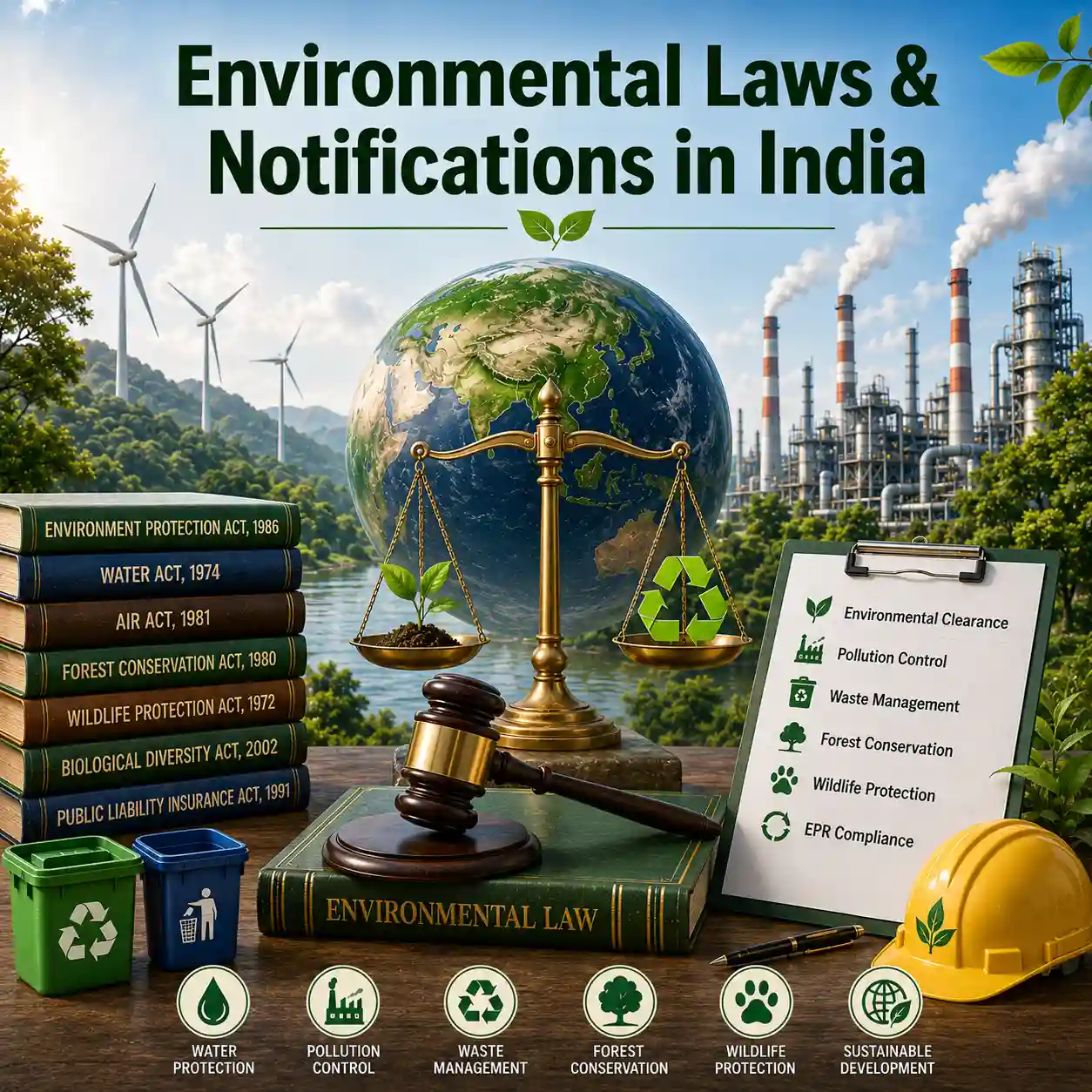
Environmental Compliance Laws for Industries and Projects
These regulations are administered by authorities such as the Ministry of Environment, Forest and Climate Change (MoEFCC), Central Pollution Control Board (CPCB), State Pollution Control Boards (SPCBs), and other environmental regulatory bodies.
This section covers major environmental laws, environmental protection regulations, waste management rules, hazardous chemical regulations, and important MoEFCC notifications applicable to industries, infrastructure projects, commercial establishments, and environmental compliance activities across India.
Major Environmental Acts in India Library
Chemical & Industrial Safety Regulations
Manufacture, Storage and Import of Hazardous Chemicals Rules, 1989
These rules regulate manufacture, storage, import, and handling of hazardous chemicals to minimize industrial accidents and environmental risks.
Chemical Accident Rules
Chemical Accident Rules regulate emergency preparedness, accident prevention, and crisis management mechanisms for industries handling hazardous chemicals.
Environmental Notifications & MoEFCC Regulations
EIA Notification 2006
The EIA Notification 2006 establishes the Environmental Clearance framework applicable to industries, infrastructure projects, mining activities, and construction projects in India.
Noise Pollution Rules
Noise Pollution Rules regulate ambient noise standards and noise control requirements applicable to industrial, commercial, residential, and silence zones.
MoEFCC Notifications & Office Memorandums (OMs)
MoEFCC periodically issues environmental notifications, amendments, office memorandums, and circulars related to:
CPCB Guidelines & Circulars
CPCB regularly issues technical guidelines, environmental standards, compliance protocols, and pollution monitoring frameworks applicable to industries and environmental projects.
Regulatory Authorities Under Environmental Laws
Ministry of Environment, Forest and Climate Change (MoEFCC)
MoEFCC is the primary authority responsible for:
- Environmental policymaking
- Issuing environmental notifications
- Environmental clearance framework
- Waste management regulations
- Environmental law administration
Central Pollution Control Board (CPCB)
CPCB develops environmental standards and pollution control guidelines related to:
- Air pollution
- Water pollution
- Waste management
- EPR compliance
- Industrial emissions
State Pollution Control Boards (SPCBs)
SPCBs implement environmental laws and regulate pollution control compliance at the state level.
Responsibilities include:
- CTE & CTO approvals
- Industry monitoring
- Environmental inspections
- Waste management authorization
- Compliance enforcement
Industries Commonly Covered Under Environmental Laws
Environmental regulations commonly apply to:
Manufacturing industries
Infrastructure projects
Mining activities
Construction projects
Hotels and commercial establishments
Chemical industries
Pharmaceuticals
Waste processing units
E-commerce and packaging businesses
Applicability depends on project category, pollution potential, and regulatory thresholds.
Latest Environmental Notifications &Amendments
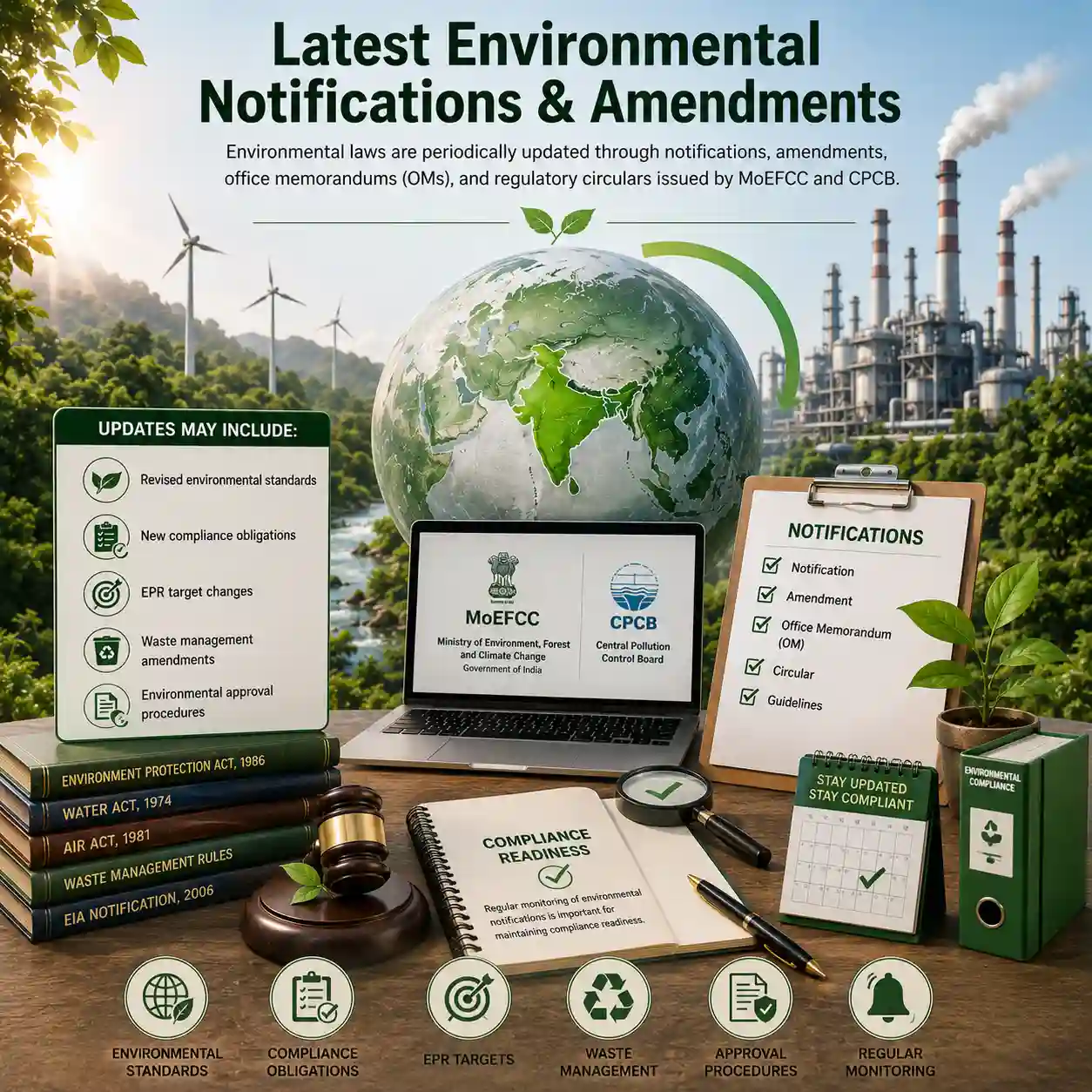
Environmental laws are periodically updated through notifications, amendments, office memorandums (OMs), and regulatory circulars issued by MoEFCC and CPCB.
Updates may include:
- Revised environmental standards
- New compliance obligations
- EPR target changes
- Waste management amendments
- Environmental approval procedures
Regular monitoring of environmental notifications is important for maintaining compliance readiness.
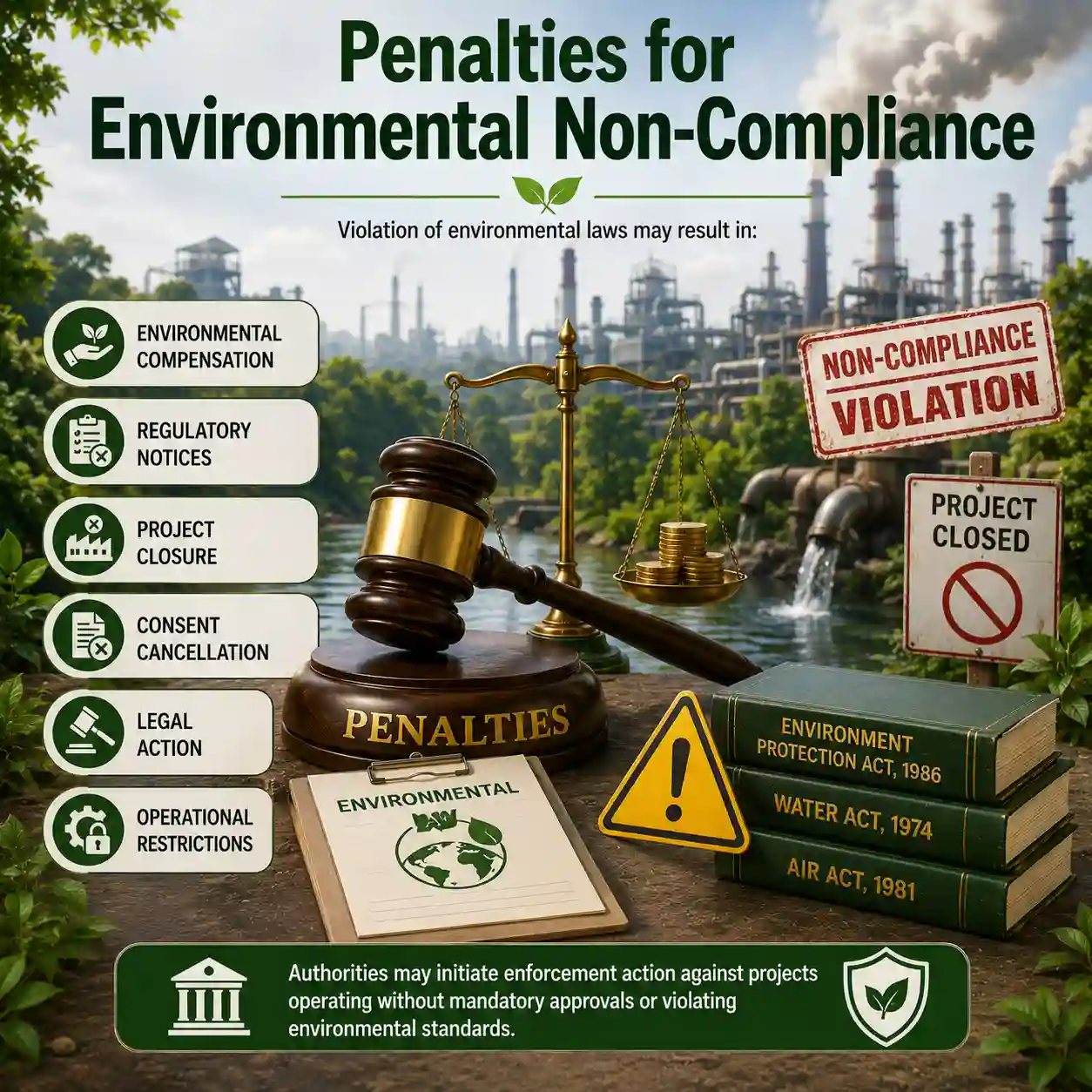
Penalties for Environmental Non-Compliance
Violation of environmental laws may result in:
- Environmental compensation
- Regulatory notices
- Project closure
- Consent cancellation
- Legal action
- Operational restrictions
Authorities may initiate enforcement action against projects operating without mandatory approvals or violating environmental standards.
Need Help with Environmental Compliance & Regulatory Approvals?
Simplicomp provides support for:
- Environmental Clearance (EC)
- Pollution Control approvals
- EPR registration
- Waste management compliance
- Groundwater approvals
- Environmental documentation and regulatory coordination