

Introduction
One of the most common questions project developers ask is:
How long will Environmental Clearance (EC) take?
The answer depends on multiple factors — but if you understand the process, you can estimate timelines more accurately.
EC approvals are processed through the PARIVESH Portal under the framework of the EIA Notification 2006.
EC approvals in India are processed through the PARIVESH Portal under the framework of the EIA Notification 2006.
Quick Answer (Short Summary)
Typical EC timeline:
- Minimum :- 3 months
- Average :- 4–6 months
- Complex projects :- 6–12 months
Step-by-Step EC Timeline Breakdown
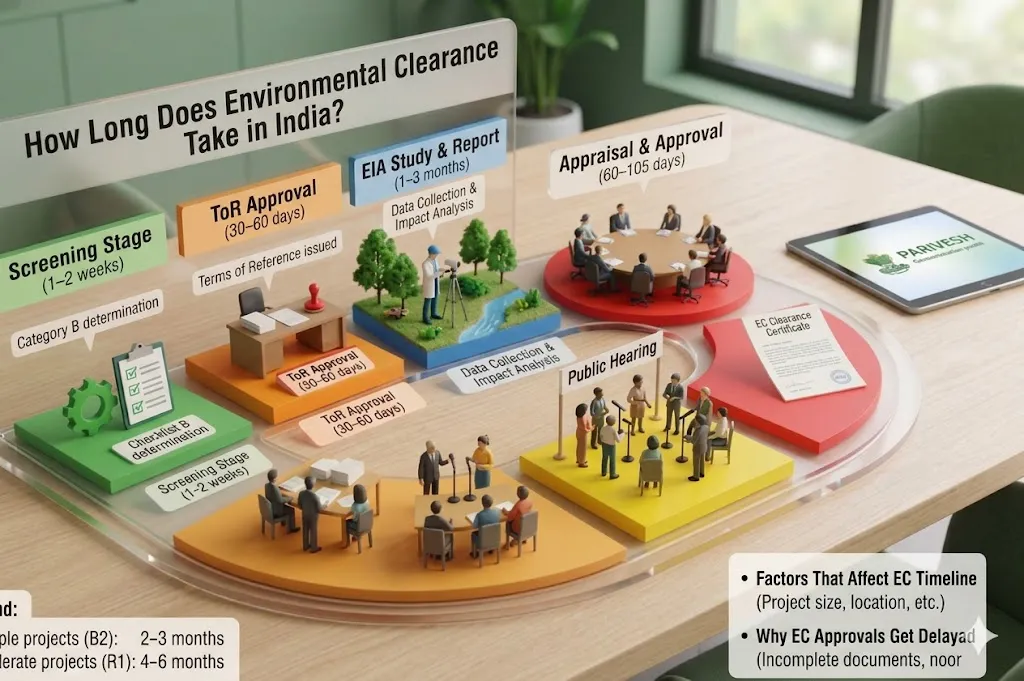
1. Screening Stage (1–2 weeks)
- Applicable for Category B projects
- Determines if EIA study is required
2.ToR Approval (30–60 days)
- Terms of Reference issued
- Defines scope of EIA study
3. EIA Study & Report Preparation (1–3 months)
- Field studies
- Data collection
- Impact analysis
This stage depends heavily on project complexity.
4. Public Hearing (30–45 days)
- Public consultation
- Feedback collection
- Report submission
5. Appraisal & Approval (60–105 days)
- Review by EAC/SEAC
- Final decision issued
Factors That Affect EC Timeline
Not all projects take the same time.
Key factors:
- Project size and category
- Location (eco-sensitive areas)
- Quality of documentation
- Public hearing delays
- Number of queries raised
Why EC Approvals Get Delayed
Most delays are avoidable.
Common reasons:
- Incomplete documents
- Poor EIA reports
- Incorrect project categorization
- Delay in responding to queries
How to Speed Up EC Approval
Here’s what actually works:
- ✔ Prepare documents in advance
- ✔ Follow ToR strictly
- ✔ Ensure accurate data
- ✔ Respond quickly to queries
- ✔ Plan public hearing early
Realistic Timeline Expectations
For most projects:
- Simple projects (B2):2–3 months
- Moderate projects (B1):4–6 months
- Large projects (A):6–12 months
Need Help to Fast-Track EC Approval?
If you want to reduce delays and avoid rework:
Get expert assistance: