

Introduction
Environmental compliance has become an essential part of industrial operations in India. Regulatory authorities are increasingly focusing on pollution control, waste management, groundwater protection, environmental monitoring, and statutory reporting obligations.
While obtaining approvals such as Environmental Clearance (EC), Consent to Operate (CTO), Hazardous Waste Authorization, and Groundwater NOC is important, maintaining ongoing compliance is equally critical.
An Environmental Audit helps industries identify compliance gaps, assess environmental risks, improve operational efficiency, and reduce the likelihood of regulatory action.
This guide explains the different types of environmental audits, audit procedures, compliance benefits, and best practices for industries.
What is an Environmental Audit?
An Environmental Audit is a systematic review of an organization's environmental performance, compliance status, pollution control systems, resource consumption, and environmental management practices.
The audit evaluates whether an industry is complying with:
- Environmental laws
- Consent conditions
- Environmental Clearance conditions
- Groundwater NOC conditions
- Waste management rules
- Pollution Control Board requirements
The objective is to identify compliance gaps before they result in notices, penalties, or environmental incidents.
Why are Environmental Audits Important?
Environmental audits help industries:
- Verify compliance status
- Identify environmental risks
- Improve pollution control performance
- Reduce environmental liabilities
- Improve resource efficiency
- Prepare for inspections
- Strengthen sustainability initiatives
A proactive audit is generally far less costly than dealing with enforcement action after a violation is identified.
Industries can also use an audit as part of a broader Environmental Compliance Checklist for Industries in India to systematically review environmental obligations.
Legal and Regulatory Importance
Environmental audits support compliance with:
- Environment (Protection) Act, 1986
- Water Act, 1974
- Air Act, 1981
- Hazardous Waste Management Rules
- Plastic Waste Management Rules
- E-Waste Management Rules
- Battery Waste Management Rules
- Environmental Clearance conditions
- Consent to Operate conditions
Many industries also use audit findings while preparing:
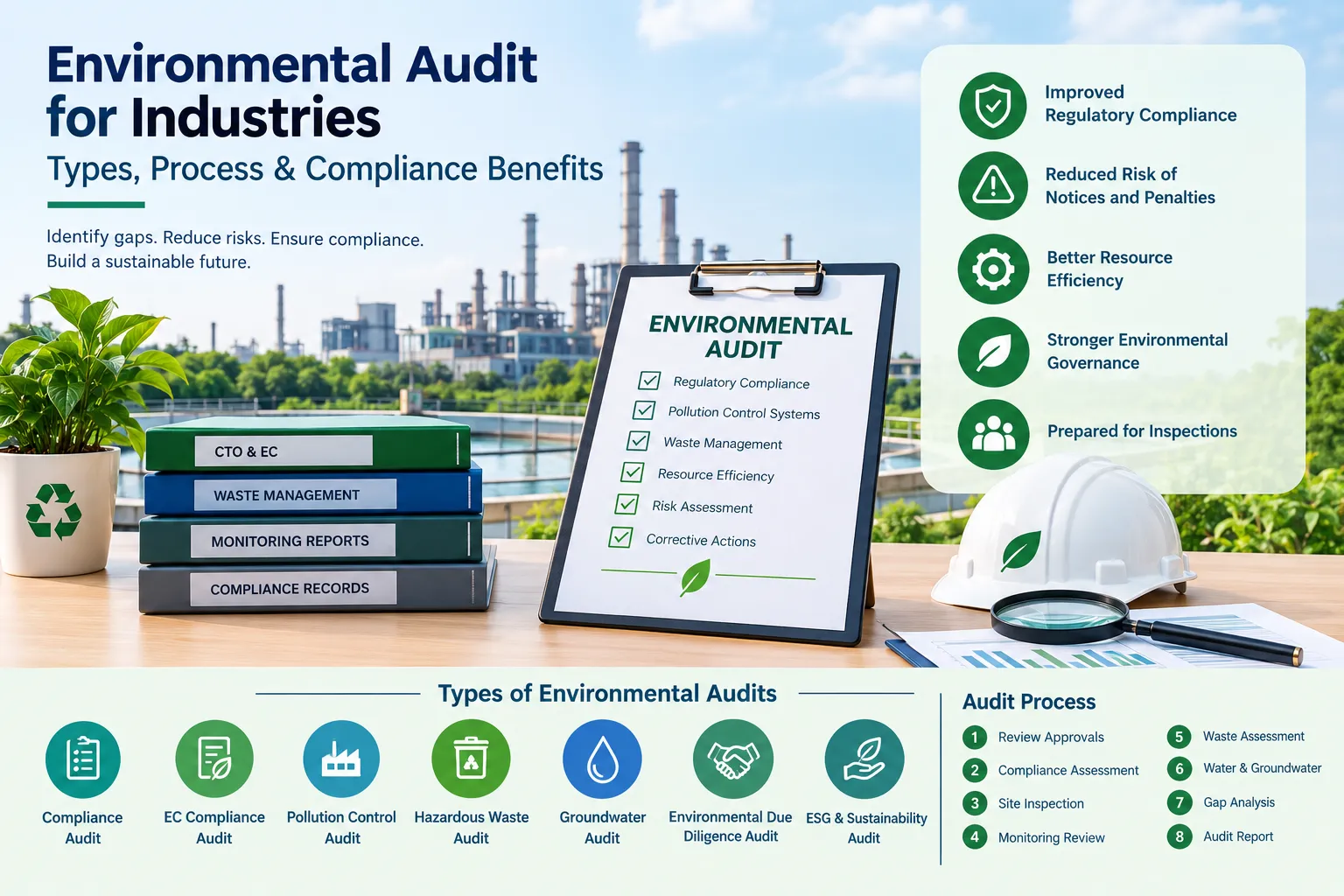
Types of Environmental Audits
Environmental audits may be conducted for different objectives.
Environmental Compliance Audit
The most common type of audit.
Focus areas include:
- Regulatory approvals
- Consent conditions
- Statutory reporting
- Environmental monitoring
- Waste management compliance
The objective is to determine whether the facility complies with applicable environmental laws and approvals.
Environmental Clearance (EC) Compliance Audit
Applicable to projects operating under Environmental Clearance.
The audit evaluates compliance with:
- EC conditions
- Environmental Management Plan (EMP)
- Monitoring commitments
- Greenbelt requirements
- Reporting obligations
Before conducting an EC compliance audit, industries can review the Documents Required for Environmental Clearance (EC) in India to ensure that important documentation is available.
Pollution Control Audit
Focuses on:
- ETP performance
- STP performance
- Air Pollution Control Devices (APCDs)
- Emission control systems
- Wastewater treatment systems
The objective is to evaluate pollution control effectiveness.
For wastewater-related audits, parameters such as BOD, COD, TDS and TSS can be important indicators of treatment performance. See
Industries should also distinguish between sewage and industrial effluent treatment systems. The guide STP vs ETP: What's the Difference Between Sewage Treatment Plants and Effluent Treatment Plants provides a useful comparison.
Hazardous Waste Compliance Audit
Reviews:
- Hazardous waste authorization
- Waste storage practices
- Manifest records
- Disposal records
- Authorized recycler arrangements
The audit should verify whether hazardous waste is being stored, transported, treated, and disposed of according to applicable requirements.
For a detailed regulatory overview, refer to Hazardous Waste Authorization Process in India: Complete Compliance Guide
Groundwater Compliance Audit
Reviews compliance with:
- Groundwater NOC conditions
- Groundwater extraction limits
- Flow meter records
- Piezometer monitoring
- Rainwater harvesting systems
Industries can also review their periodic reporting obligations through Groundwater Annual Compliance & Returns: Complete Guide for Industries
Environmental Due Diligence Audit
Typically conducted during:
- Mergers
- Acquisitions
- Asset transfers
- Industrial property transactions
The objective is to identify environmental liabilities and compliance risks.
ESG and Sustainability Audit
Increasingly adopted by large organizations. Focus areas include:
- Water efficiency
- Energy efficiency
- Waste minimization
- Carbon management
- Sustainability performance
When Should Industries Conduct Environmental Audits?
Environmental audits are particularly useful:
- Before CTO renewal
- Before EC compliance submissions
- Before regulatory inspections
- Before project expansion
- During internal compliance reviews
- Following regulatory notices
- Before investor due diligence exercises
Many industries conduct annual audits as a preventive compliance measure.
An audit before CTO renewal can help identify missing records, expired approvals, monitoring gaps, and non-compliance issues before the renewal application is submitted.
Environmental Audit Process
Step 1 – Review of Regulatory Approvals
The audit begins with verification of:
- CTO
- CTE
- Environmental Clearance
- Hazardous Waste Authorization
- Groundwater NOC
- EPR registrations
The objective is to ensure that all approvals remain valid.
Step 2 – Compliance Assessment
Review of:
- Consent conditions
- Approval conditions
- Regulatory commitments
- Reporting obligations
Any gaps are identified.
Step 3 – Site Inspection
Physical inspection of:
- Production areas
- Utility systems
- Pollution control systems
- Waste storage areas
- Environmental infrastructure
The objective is to verify actual field conditions.
Step 4 – Environmental Monitoring Review
Review of:
- Air monitoring reports
- Wastewater analysis reports
- Noise monitoring reports
- OCEMS data
- Stack monitoring reports
Monitoring data is evaluated against applicable standards.
Industries using online monitoring systems can also refer to OCEMS Compliance Guide for Industries: CPCB Requirements, Monitoring & Regulatory Obligations when reviewing their monitoring and reporting practices.
Step 5 – Waste Management Assessment
Evaluation of:
- Hazardous waste management
- Solid waste management
- Plastic waste management
- E-waste management
- Battery waste compliance
Step 6 – Water & Groundwater Review
Assessment of:
- Water consumption
- Water balance
- Groundwater extraction
- Recharge systems
- Rainwater harvesting
A proper water balance review can help industries identify excessive water consumption and potential compliance gaps. The Industrial Water Balance Study Explained: Why It Matters for Groundwater NOC, EC & ZLD Compliance guide provides further information on this subject.
Step 7 – Gap Analysis
The audit identifies:
- Non-compliance issues
- Operational weaknesses
- Documentation gaps
- Regulatory risks
Corrective actions are then recommended.
Step 8 – Audit Report
The final report typically includes:
- Audit observations
- Compliance status
- Risk assessment
- Corrective actions
- Priority recommendations
The report provides a roadmap for improving compliance performance.
Common Compliance Issues Identified During Audits
Environmental audits frequently identify:
- Expired CTO approvals
- Missing environmental monitoring reports
- Non-functional ETP/STP systems
- Improper hazardous waste storage
- Missing manifests
- Incomplete Form V submissions
- Groundwater extraction beyond approved limits
- Poor maintenance of recharge structures
- EC compliance gaps
- OCEMS connectivity issues
Addressing these issues early reduces regulatory risk.
Industries should also maintain a structured Environmental Approvals & Compliance Checklist Required to Set Up a Manufacturing Plant in India to track approvals and recurring compliance requirements.
Benefits of Environmental Audits
Improved Regulatory Compliance
Audits help ensure compliance with applicable environmental laws and approvals.
Reduced Risk of Notices and Penalties
Compliance gaps can be corrected before they result in enforcement action.
Better CTO and EC Compliance
Audit findings support:
- CTO renewals
- EC compliance reporting
- Groundwater compliance submissions
Improved Resource Efficiency
Audits often identify opportunities for:
- Water conservation
- Energy efficiency
- Waste minimization
Stronger Environmental Governance
Organizations gain greater visibility into compliance obligations and environmental risks.
Better Preparedness for Inspections
Facilities are better prepared for SPCB, CPCB, CGWA, or NGT inspections.
Environmental Audit vs Environmental Monitoring
Many industries confuse the two.
Environmental Monitoring
Focuses on:
- Sampling
- Testing
- Data collection
such as air, water, noise, and wastewater monitoring.
Environmental Audit
Focuses on:
- Compliance evaluation
- Risk assessment
- System review
- Corrective action planning
Monitoring provides data; audits evaluate compliance using that data.
Environmental Audits and Environmental Compensation
Regular environmental audits can significantly reduce the risk of:
- Environmental Compensation
- SPCB notices
- Closure directions
- Regulatory prosecution
- NGT proceedings
By identifying issues early, industries can take corrective action before regulators intervene.
Best Practices for Environmental Audits
- Conduct annual environmental audits
- Review all environmental approvals
- Verify monitoring records
- Maintain waste management documentation
- Review consent conditions regularly
- Conduct groundwater compliance reviews
- Track corrective actions
- Maintain audit records
Maintaining an updated Environmental Compliance Checklist for Industries in India can make periodic audit preparation more systematic.
Related Guides & Resources
- EC Application Mistakes Parivesh →
- EIA Guidelines India 2026 →
- Public Hearing Process in EIA →
- 5 Reasons to Adopt Rainwater Harvesting →
- How Long Groundwater NOC Takes →
Need Help with Hazardous Waste Compliance?
Simplicomp assists industries with:
- Environmental Clearance (EC)
- CTE & CTO approvals
- Groundwater NOC approvals
- EPR registration
- Hazardous waste compliance
- Environmental monitoring
- SPCB compliance management
- Environmental audits and reporting