

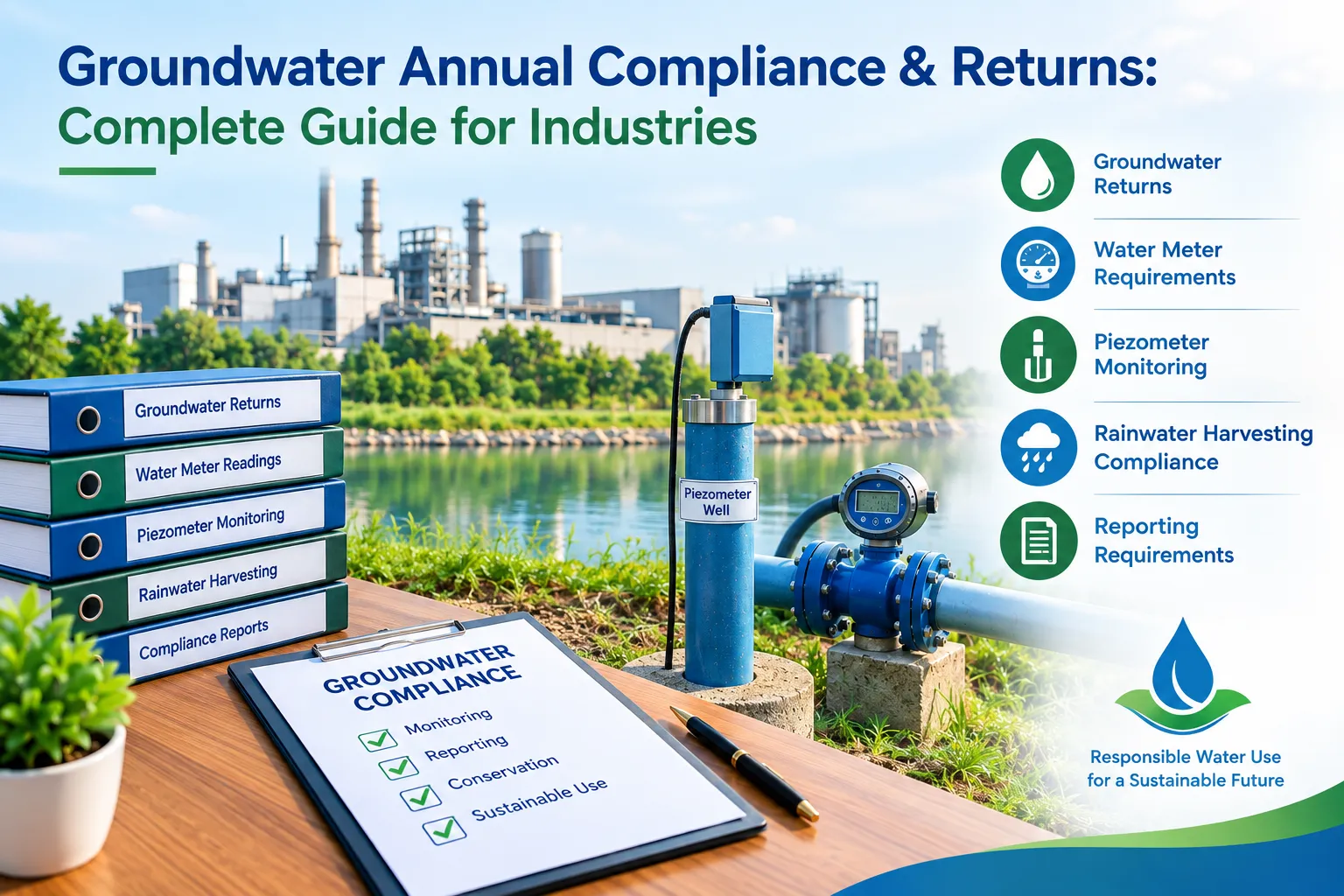
Introduction
Obtaining a Groundwater NOC is only the first step in groundwater compliance.
Industries, infrastructure projects, commercial establishments, and institutions that have received permission to extract groundwater are generally required to comply with ongoing reporting, monitoring, and groundwater management obligations.
One of the most important annual environmental reporting requirements in India is the submission of the Environmental Statement in Form V.
Why Groundwater Compliance Continues After NOC Approval
Groundwater approvals are typically issued subject to conditions relating to:
- Groundwater extraction limits
- Water conservation
- Rainwater harvesting
- Groundwater recharge
- Monitoring requirements
- Reporting obligations
Authorities require periodic compliance submissions to verify that groundwater is being extracted responsibly and within approved limits.
Failure to comply with these conditions may result in regulatory action even if a valid Groundwater NOC has been issued. Understanding the Groundwater NOC Process in India can help industries understand approval conditions and ongoing obligations.
Authorities Monitoring Groundwater Compliance
Depending upon project location, compliance obligations may be monitored by:
Central Ground Water Authority (CGWA)
CGWA regulates groundwater extraction in many parts of India and requires periodic compliance reporting from approved users.
Haryana Water Resources Authority (HWRA)
HWRA monitors groundwater extraction and compliance obligations for approved projects in Haryana.
Uttar Pradesh Ground Water Department (UPGWD)
UPGWD regulates groundwater extraction and reporting requirements in Uttar Pradesh.
Punjab Water Regulation and Development Authority (PWRDA)
PWRDA oversees groundwater abstraction and compliance requirements in Punjab.
Other State Groundwater Authorities
Several states have established independent groundwater authorities with separate reporting and monitoring requirements.
Industries should always verify state-specific obligations applicable to their location. For broader regulatory background, see Groundwater Laws & Regulations in India.
Who Must Submit Groundwater Compliance Reports?
Groundwater compliance obligations commonly apply to:
- Manufacturing industries
- Industrial parks
- Warehouses
- Hotels
- Hospitals
- Educational institutions
- Infrastructure projects
- Commercial complexes
- Mining projects
- Large residential developments
Applicability depends on the terms of approval and groundwater extraction quantity.
Common Groundwater NOC Conditions
Groundwater approvals frequently contain conditions relating to:
- Approved extraction quantity
- Installation of digital flow meters
- Rainwater harvesting systems
- Groundwater recharge structures
- Piezometer installation
- Water conservation measures
- Annual compliance reporting
These conditions remain enforceable throughout the validity period of the approval.
Industries should also understand the Groundwater Extraction Permission in India requirements when planning groundwater abstraction and compliance measures.
Annual Groundwater Returns
One of the most important compliance requirements is submission of annual groundwater returns.
Authorities may require details relating to:
- Groundwater extracted during the year
- Monthly extraction records
- Water consumption
- Groundwater recharge measures
- Rainwater harvesting performance
- Water conservation initiatives
The return enables regulators to assess whether groundwater extraction remains within approved limits.
Maintaining a proper Water Balance Study can also help industries track extraction, consumption, recycling, and conservation data.
Groundwater Extraction Monitoring
Approved entities are generally required to maintain records of groundwater withdrawal.
This may involve:
- Digital flow meters
- Automated monitoring systems
- Monthly extraction records
- Meter calibration records
Accurate extraction records form the basis of annual compliance reporting.
Installation and Maintenance of Water Meters
Most groundwater approvals require installation of:
- Digital water flow meters
- Tamper-proof monitoring systems
- Groundwater extraction measurement devices
Industries should ensure that:
- ✔ Meters remain functional
- ✔ Readings are recorded regularly
- ✔ Calibration records are maintained
- ✔ Monitoring records are preserved
Improper monitoring may lead to compliance observations.
Piezometer Monitoring Requirements
Many groundwater authorities require installation of piezometers for monitoring groundwater levels.
Piezometers help track:
- Groundwater table fluctuations
- Seasonal changes
- Aquifer conditions
- Long-term groundwater trends
Groundwater level monitoring data may be required during annual compliance submissions.
For additional technical background, industries can refer to Groundwater Monitoring Explained: Methods, Parameters & Compliance Requirements.
Rainwater Harvesting Compliance
Rainwater harvesting is a key condition in many groundwater approvals.
Industries are often required to:
- Maintain recharge pits
- Maintain recharge wells
- Keep rainwater harvesting systems operational
- Prevent blockage of recharge structures
Authorities may verify whether recharge structures remain functional throughout the year.
For a broader understanding of regulatory requirements, see Rainwater Harvesting Requirements under CGWA, HWRA & State Groundwater Authorities.
Water Conservation Measures
Groundwater authorities increasingly encourage:
- Water recycling
- Treated wastewater reuse
- Process water optimization
- Leak prevention
- Water-efficient technologies
Many approvals require industries to demonstrate ongoing water conservation efforts.
A detailed Industrial Water Balance Study can help evaluate water consumption, reuse, recycling, and discharge streams.
Groundwater Recharge Obligations
Projects located in Semi-Critical, Critical, and Over-Exploited areas may face stricter recharge requirements.
Compliance may involve:
- Artificial recharge structures
- Recharge wells
- Recharge trenches
- Rooftop rainwater harvesting systems
Recharge infrastructure should be maintained throughout the approval period.
Industries can also learn more about Groundwater Categorization Explained: Safe, Semi-Critical, Critical & Over-Exploited Areas in India.
Documents Commonly Required for Annual Compliance
Typical submissions may include:
Groundwater Extraction Records
Monthly and annual extraction data.
Flow Meter Readings
Records showing groundwater withdrawal quantities.
Piezometer Monitoring Data
Groundwater level monitoring records.
Rainwater Harvesting Details
Status and maintenance records of recharge structures.
Water Conservation Reports
Information regarding water-saving initiatives and reuse systems.
Photographs of Compliance Infrastructure
Authorities may require photographs of:
- Flow meters
- Recharge pits
- Piezometers
- Rainwater harvesting systems
Common Groundwater Compliance Violations
Groundwater authorities frequently identify:
- Extraction beyond approved limits
- Non-functional flow meters
- Missing groundwater records
- Failure to install piezometers
- Poor maintenance of recharge structures
- Non-submission of annual returns
- Violation of approval conditions
These issues may trigger notices and enforcement action.
Environmental Compensation for Groundwater Violations
Groundwater authorities and regulatory bodies increasingly impose Environmental Compensation for:
- Unauthorized groundwater extraction
- Extraction beyond approved limits
- Failure to comply with NOC conditions
- Non-installation of monitoring systems
- Non-maintenance of recharge structures
The Environmental Compensation Explained in India guide provides additional information about circumstances in which industries may face environmental compensation.
The Polluter Pays Principle is increasingly being applied to groundwater violations.
Groundwater NOC Renewal and Compliance History
Compliance performance often influences:
- Renewal of Groundwater NOC
- Extension of approvals
- Additional groundwater permissions
Authorities may review past compliance records before granting renewals.
Maintaining consistent compliance reduces regulatory risk.
Industries can also refer to How Long Does Groundwater NOC Approval Take in India? for additional information about groundwater approval timelines.
Best Practices for Groundwater Compliance
Industries should:
- Maintain monthly groundwater extraction records
- Conduct periodic meter verification
- Maintain piezometers
- Keep recharge structures operational
- Submit annual returns on time
- Maintain photographic records
- Conduct periodic groundwater compliance audits
- Review NOC conditions regularly
Related Resources
- Water Balance Study Industries →
- Borewell Permission Rules for Industries →
- Environmental Compensation Explained →
- How Long Groundwater NOC Takes →
Need Help with Groundwater Compliance?
Simplicomp assists industries with:
- Groundwater annual compliance reporting
- CGWA compliance submissions
- HWRA compliance support
- UPGWD compliance reporting
- PWRDA compliance management
- Water balance studies
- Groundwater monitoring
- Groundwater NOC renewals